
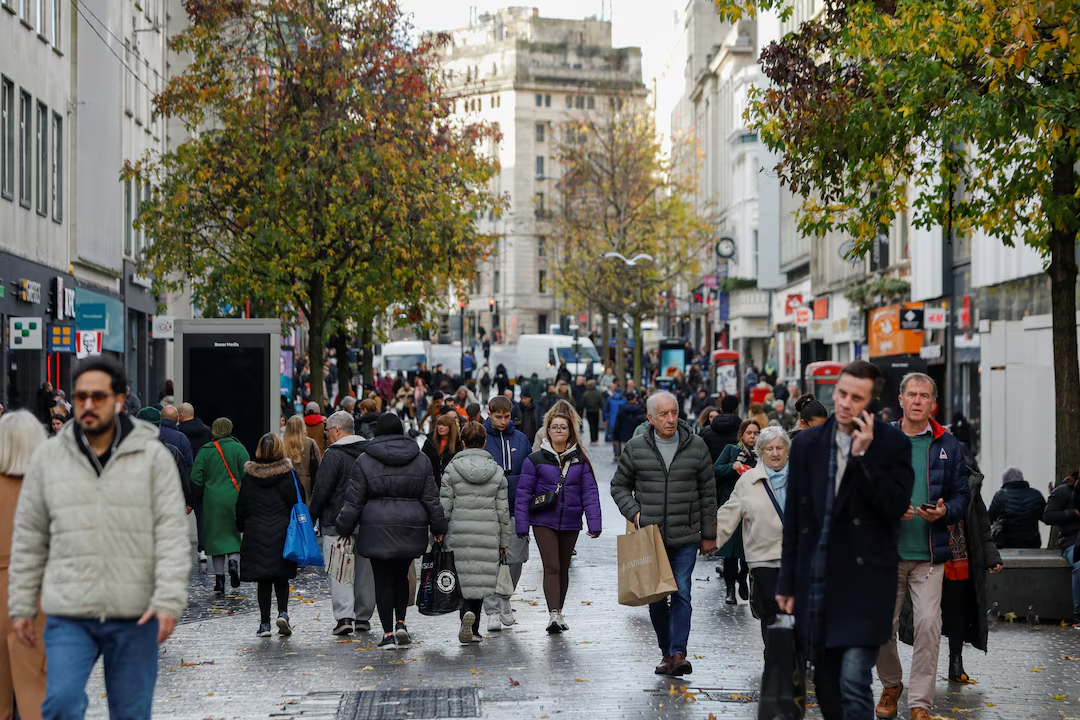
Birmingham, January 26, 2026 UK businesses are showing early signs of recovery as consumer confidence begins to stabilise after months of economic uncertainty, according to fresh industry feedback released on Monday. While challenges remain, firms across retail, manufacturing, and services report cautious optimism as spending patterns show modest improvement.
Business owners in several regions said customer footfall has increased compared with late 2025, driven in part by easing inflation pressures and greater clarity around household budgets. Although spending remains selective, consumers appear more willing to make non-essential purchases than they were in recent months.
Small and medium-sized enterprises, which were among the hardest hit during previous downturns, reported improved order volumes and steadier cash flow. Retailers in city centres such as Birmingham, Leeds, and Bristol noted that weekend trading has strengthened, particularly in food, clothing, and personal services.
Manufacturers also reported stabilising demand, with fewer cancellations and a gradual return of longer-term contracts. Some firms said supply chains have become more predictable, reducing unexpected costs and helping businesses plan ahead with greater confidence.
Despite these positive signals, business leaders warned that recovery remains fragile. Energy costs, staffing pressures, and borrowing expenses continue to weigh on balance sheets, particularly for companies still repaying loans taken during earlier periods of economic stress.
Hospitality operators described mixed conditions. While bookings have increased in some areas, especially for weekends and events, weekday trade remains uneven. Restaurant owners said customers are dining out more frequently but remain price-sensitive, opting for value-focused options rather than premium experiences.
Employment levels have largely held steady, with many businesses choosing to retain staff rather than expand workforces. Employers said recruitment remains cautious, with firms prioritising productivity and efficiency over rapid growth. Some companies reported increased interest in flexible working arrangements as a way to manage costs and retain skilled workers.
High street analysts said the improvement in consumer confidence is closely linked to perceptions of economic stability rather than strong growth. Shoppers appear more comfortable making purchases when they feel their finances are predictable, even if incomes have not risen significantly.
Local authorities welcomed the encouraging signs but urged continued support for businesses, particularly in town centres still recovering from reduced footfall. Several councils said regeneration projects and local investment initiatives are helping attract visitors and boost economic activity.
Financial advisers cautioned against overconfidence, noting that global uncertainty and domestic policy changes could still affect momentum. However, they acknowledged that sentiment has shifted from pessimism toward cautious resilience.
For many businesses, the current period represents an opportunity to rebuild gradually rather than expand aggressively. Owners said lessons learned during recent challenges have led to more careful planning, diversified revenue streams, and stronger focus on customer loyalty.
As the year progresses, businesses will be watching closely to see whether early improvements translate into sustained growth. For now, the mood on the ground suggests a sector determined to recover, even as it navigates ongoing pressures.